
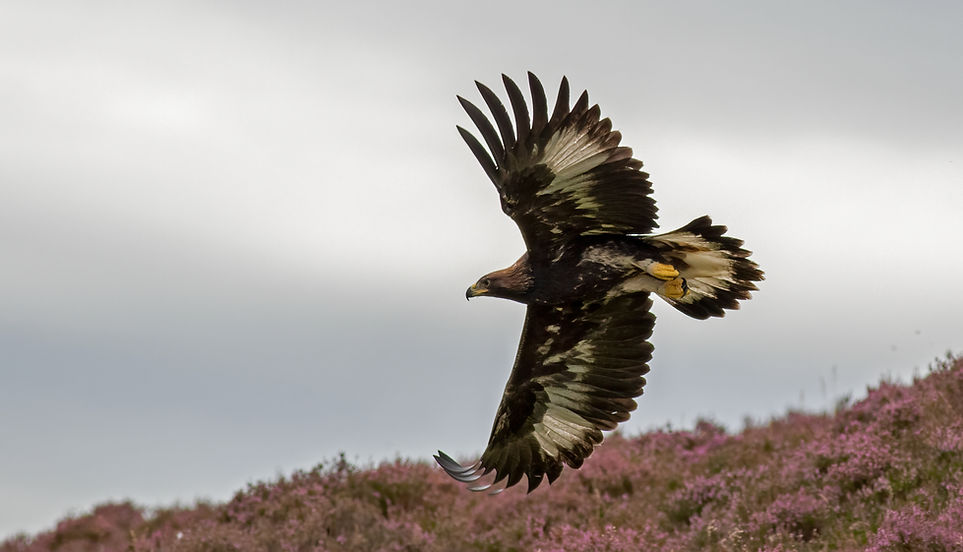
Our work with Golden Eagles
Conservation and Restoration
Restoring Upland Nature is a new charity and the new home of the award-winning South of Scotland Golden Eagle Project.
Our vision is to see native species, and the habitats they depend upon, restored and better protected through greater awareness, direct conservation action, evidence based science, improved policies and enhanced land management practices.
Golden Eagle Translocation
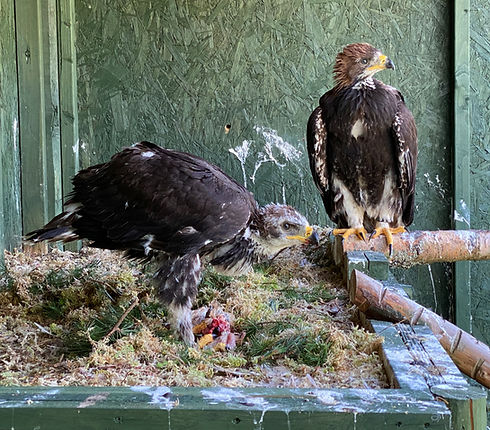
In order to boost the numbers of eagles in the south of Scotland, eaglets were relocated from eyries further North and brought to custom built aviaries at a confidential location in the Moffat Hills. After a brief stay they were released into the Southern Uplands to interact with the few resident eagles and provide more incentive for wandering birds to remain in the south. Only eyries containing two chicks were collected from, with one eaglet remaining in its natal territory. The eaglets were not collected until they reached 5 to 8 weeks old, at which point they were feathered, could keep themselves warm and dry and were able to feed themselves from the food provided. Our immense gratitude goes to the Scottish Raptor Study Groups and Land-owners without whom these collections would not have been possible.
Satellite Tagging
In order to track the translocated eagles, all released birds were fitted with satellite trackers. These state of the art, solar powered devices transmit regular, reliable and accurate information, allowing us to precisely follow the movements of the youngsters as they explored their new surroundings. The tags were fitted by highly experienced, licensed individuals shortly before release and weighed less than 4 % of the bird's overall body weight. The birds were also fitted with a colour ring with letters and numbers that are readable in the field.

Release
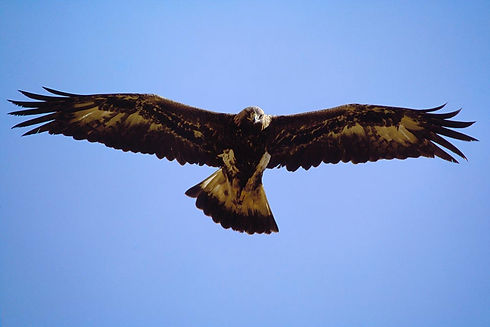
When the young eagles were ready to be released, hatches on the front of the aviaries were opened and the translocated birds were free to leave of their own volition. Established feeding locations in view of the aviaries continued to be provisioned with carrion throughout the late summer into the colder seasons to support the young birds through their first winter and to encourage them to remain in the south. Historic eyrie sites were built up in readiness for potential first breeding attempts in the latter stages of the project and beyond.
Monitoring
The Project Team continue to monitor the young eagles following their release by both following the satellite data and monitoring the birds in the field. Eagle Officer John Wright coordinated the fieldwork and with open and regular communication with the Scottish Raptor Study Groups, land-owners, land managers, farmers and local communities we have watched the young pioneers flourish and once again become a more prosperous part of the landscape for generations to come.
