

Distribution Changes of Red and Grey Squirrels in the UK since 1945
In the UK, invasive non native grey squirrels now vastly outnumber native red squirrels, with an estimated 2.5 to 2.7 million greys compared to fewer than 287,000 reds. Native red squirrels are now endangered and largely confined to Scotland (roughly 80% of the population) the Isle of White, Anglesey, and parts of north Wales and northern England.

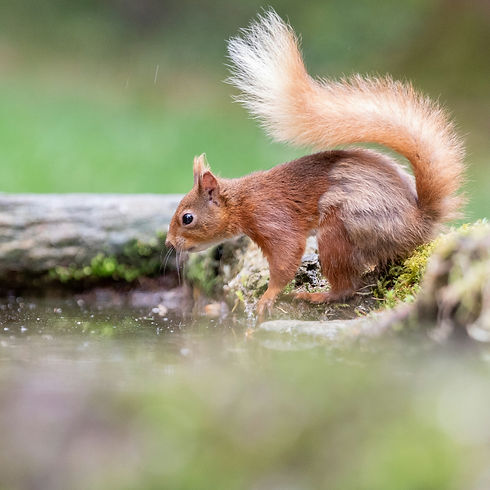
Working to increase Red Squirrels in Southern Scotland
Red squirrels are one of our most iconic native species but are threatened with extinction in the UK. Now fewer than 300,000 red squirrels remain in the UK, compared to over 2.7 million non native grey squirrels. Reds have disappeared from 60 % of their natural habitats in the last 13 years.
Red squirrels are endangered in the UK due to the spread of grey squirrels, which outcompete them for food and habitat. Grey squirrels can also carry the lethal squirrel pox virus, which is always fatal to red squirrels but doesn’t harm greys.
Scotland remains the stronghold for red squirrels, holding over 80 % of the UK population, with isolated populations of red squirrels remaining in northern England, Anglesey and on the Isle of White.
RUN is one of the conservation delivery partners of the Red Squirrel Recovery Network project, which is working with a network of Red Squirrel Volunteer Groups and other key stakeholders to increase the numbers of red squirrels across southern Scotland and northern England through a five year Heritage Lottery project.
Threats to Red Squirrels
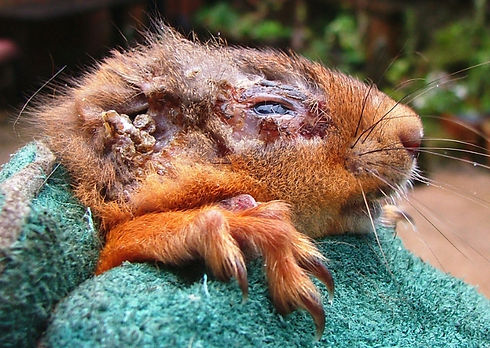
The greatest threat to the survival of red squirrels is the non native grey squirrel. Introduced to the UK in 1876, grey squirrels have since spread rapidly and carry the deadly squirrel pox virus. While grey squirrels act as a reservoir for the virus and show no symptoms, red squirrels become severely ill within days of exposure. The disease is extremely debilitating; causing lesions and blindness and is always fatal to red squirrels. Without intervention, squirrel pox can wipe out local red squirrel populations with devastating speed. If you find a lethargic or infected red squirrel or a dead red squirrel (that has lesions) please report it to your local red squirrel group immediately. Grey squirrels are around twice the size of red squirrels and outcompete them for food and habitat. Their larger body size, more dominant behaviour, and ability to digest a wider range of food sources give them a competitive advantage. As a result, red squirrels are pushed into marginal habitats where survival becomes harder. Across much of the UK, this competition has led to the complete loss of many red squirrel populations. Other threats to red squirrels include: forestry operations (particularly within the breeding season); domestic animals (including dogs and cats) predating on them and red squirrels being killed on our roads. Red squirrels also have several natural predators, including large raptors and pine marten. However, studies show that pine martens can significantly reduce grey squirrel numbers, as greys are slower and spend more time on the ground and have not co-evolved with pine marten to perceive them as a threat. Where pine martens are present, grey populations often decline, allowing red squirrel numbers to recover and expand their range.